
Ervin Schmucker Makes a Blind Accessible to All
Opening the Woods to Everyone: A Handicap-Accessible Blind in Michigan
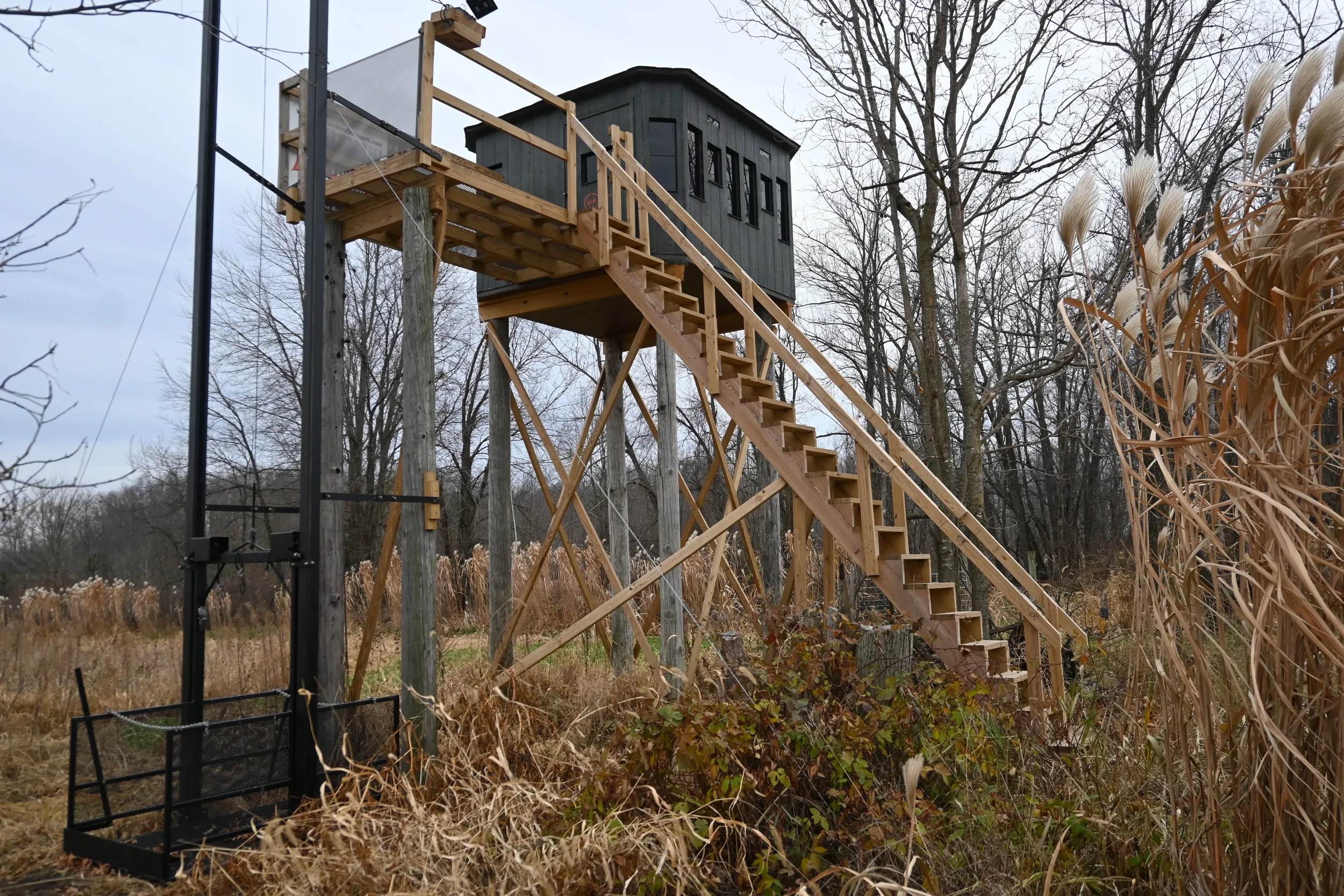
One of the things we love most about the hunting community is how it rallies around the idea that the outdoors should be for everyone. A recent story out of West Michigan highlights that spirit perfectly. A young man named Ervin Schmucker, from Schmucker’s Outdoors in Quincy, Michigan has built a fully handicap-accessible hunting blind designed to help disabled hunters experience the hunt again. Schmucker’s Outdoors also is an Authorized 360 Hunting Blinds dealer.
At 25 years old, Schmucker was diagnosed with juvenile Parkinson’s, a condition that causes tremors and weakness throughout the body. Instead of letting the diagnosis slow him down, it pushed him in a different direction. He made a promise to himself: If he could get back on his feet, he would spend the rest of his life, every chance he gets, helping others who are less fortunate.
Over the course of eight months, Schmucker designed and built a custom blind, some of it made from 360 Hunting Blind material, that removes many of the barriers disabled hunters face in the field. The blind features an elevator lift capable of raising wheelchairs 18 feet into the air, giving hunters the same elevated vantage point that able-bodied hunters typically get from a tree stand. For anyone who has hunted before, you know elevation can make all the difference in visibility, scent control, and shot opportunities. But Schmucker didn’t stop there. He also integrated adaptive shooting technology to make it possible for hunters with limited mobility to safely operate a firearm or crossbow. One of the most innovative parts of the blind is the “sip and puff” trigger system, which allows hunters with little to no motor function to fire a weapon. The system is controlled by a joystick and a small rubber button that the hunter can bite, activating the trigger. For safety, a hunting companion must first engage a safety pendant, ensuring the system cannot be accidentally activated. As Schmucker explained in the interview, safety was a major part of the design. “Depending on their condition, their movement may be uncontrollable. So you don’t want a weapon just firing out of nowhere. With the safety engaged, the hunter can then use the bite-trigger to take the shot when deer and weapon are lined up!
One of the first people to use the blind was Ron Bates, who has been paralyzed for nearly 30 years. Despite his limited mobility and lack of hand movement, Bates was able to experience something he hadn’t before. Being elevated high above the ground during a hunt.
And on his very first trip up in the blind, he was able to fill a deer tag! For many disabled hunters, the challenge isn’t just mobility, it’s exposure to the elements and the inability to conceal themselves properly in the field. As Bates explained, traditional setups simply don’t work. You can’t just pull into a field and sit on the ground. You’ll be exposed to the cold, and deer will spot you immediately. This blind turns an obstacle into opportunity.
Schmucker hopes this is only the beginning. His goal is to expand the initiative, placing more accessible blinds on properties throughout the region so that more hunters can take advantage of the opportunity. Local leaders have already recognized the impact of Schmucker’s work. Branch County Sheriff’s Captain Todd Riley noted how powerful the project is, pointing out that despite being diagnosed with Parkinson’s at a young age, Schmucker never gave up and continues to focus on helping others experience the outdoors. It’s a powerful reminder that limitations don’t have to end a passion for the outdoors. If you would like to learn more about the project, donate, or potentially host one of these blinds on your property, you can contact Ervin Schmucker directly at (616) 780-2985.
Below is a youtube video of Ron Bate’s hunt! As well as a link to a related news article.
